
4 products
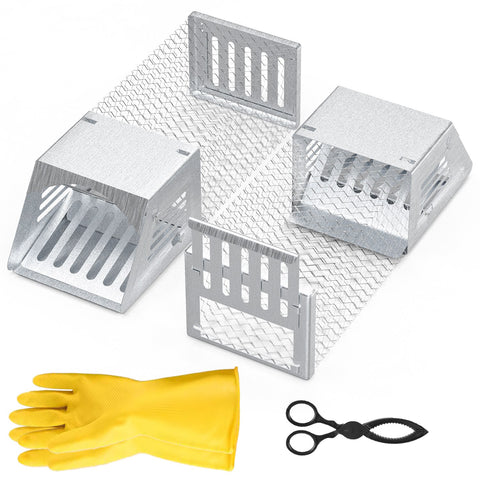


How to Choose the Right Mouse Trap
The right mouse trap depends on where the problem is happening, whether you want to catch or kill, and how many mice you are dealing with. These are the main factors worth checking before you buy.
-
Trap type: Snap traps work fast and are reusable. Cage traps allow catch and release. Live catch and glue traps suit narrower situations, and electric traps give a fast, enclosed result. Check what each format is actually built for before choosing one.
-
Kill or catch and release: Decide upfront whether you want the mouse removed alive or dealt with quickly, since this changes which trap type fits and how often you need to check it.
-
Where the trap goes: An indoor room, a garage, a shed, a loft, or an outdoor space each call for a different level of durability and a different design.
-
Households with pets or children: Enclosed and covered trap designs reduce the chance of accidental contact, and every trap should sit out of reach regardless of the type you choose.
-
Number of mice: A single trap works for light activity. Multi-catch or continuous catch traps make more sense when there is repeat evidence of mice.
-
Reusable or disposable: Some traps need cleaning and resetting after every catch, while others are built to be thrown away. Decide what you are willing to handle.
-
Bait and placement: A trap only works when it sits against a wall on an active run rather than out in open floor space, and bait should be a small amount rather than a large chunk.
Matching the trap to your specific situation, rather than buying whatever is cheapest, is what actually determines whether it works.
Best Mouse Traps by Use Case
If you already know where the mice are and what kind of result you want, this table can help you narrow down the right trap type quickly.
|
Use Case |
Best Trap Type |
Buyer Need |
|
Kitchen or pantry |
Enclosed snap or covered trap |
Catch mice without exposing the trap near food areas |
|
Garage or shed |
Heavy-duty snap or cage trap |
Handle higher rodent traffic in utility spaces |
|
Homes with pets or children |
Covered or enclosed trap |
Reduce accidental contact with the trap mechanism |
|
Catch and release preference |
Humane live catch cage trap |
Remove mice without killing them |
|
Ongoing or repeat activity |
Multi-catch or continuous catch trap |
Catch more than one mouse per setting |
|
Outdoor sheds and outbuildings |
Weather-tolerant cage or covered trap |
Manage rodents before they reach the house |
|
Fast, hands-off results |
Electric mouse trap (pending link, Electric Traps) |
No-touch disposal and quick results |
Product descriptions in the grid above list the exact capacity and design details for each option, so you can compare within a category before deciding.
Where to Place a Mouse Trap
Mice travel along walls and behind furniture rather than across open floor, so a trap placed in the middle of a room rarely gets used. Set traps flush against a wall, with the trigger end facing outward, so a mouse moving along its usual route runs straight into it. This single placement rule matters more than the trap type you choose.
Common spots include under the sink, behind the refrigerator, along the back of kitchen cabinets, inside the pantry, along garage walls, in loft corners, and near any visible gap where pipework or cables enter the house. Outdoor mouse traps follow the same logic in sheds and outbuildings: place them along the interior walls rather than in the center of the floor, and check them more often than you would indoors, since outdoor conditions affect bait faster.
For the best mouse traps for home use, set more than one at a time rather than relying on a single trap, since mice rarely travel alone and a few placements spaced a few feet apart along the same wall cover more ground than one trap moved around the house. Keep every trap away from food preparation surfaces, and position them out of reach of pets and children regardless of the room.
Mouse Traps vs Other Rodent Control Products
Mouse traps are the right call once you have clear evidence of mice indoors, but other products handle prevention, containment, and different rodent species better. This table gives a quick comparison.
|
Product Type |
Best For |
When to Use |
|
Mouse traps |
Catching mice you already have |
When there is active evidence indoors |
|
Fast, enclosed catches |
When you want no-touch disposal |
|
|
Contained bait placement |
When rats are the issue and containment matters |
|
|
Discouraging mice from settling |
Prevention alongside trapping |
|
|
Broader rodent deterrence |
Garages, sheds, and mixed rodent activity |
|
|
Chemical-free deterrence |
Ongoing indoor prevention |
|
|
Sealing entry points |
Stopping new mice getting in |
Alongside any trapping plan |
None of these products fully replaces the others, and most households end up combining two or three depending on how established the problem is. You can read more on whether ultrasonic pest repellers work if prevention is part of your plan.
Why Choose PestAside Mouse Traps?
PestAside's mouse trap range covers snap, humane cage, and electric options, so you are not limited to one method regardless of how you want to handle the mice you find. Reusable designs and multi-packs make it easier to set several traps at once, which matters more than trap quality alone for getting a result. Whether you want a catch-and-release option or a fast result with minimal handling, there is a trap here built for that preference.
If the problem turns out to be broader than mice alone, such as ongoing indoor prevention or activity in more than one part of the property, the wider pest control range on the site covers chemical-free deterrent options as well. Every trap in this collection is built to give a straightforward result, whether it is checked daily or reused across multiple mice.
Related Rodent Control Products
If mice are not the only concern in your home, these related collections cover prevention, broader deterrence, and household-specific needs.
-
Ultrasonic pest repellers for chemical-free deterrence alongside trapping
-
Indoor and outdoor pest control for a wider view across pest types and settings
-
Pest repellent for broader deterrent options beyond rodents
-
Pet-friendly pest control for households weighing trap placement around animals
-
Kid-safe pest control for homes where trap placement around children is a priority
-
Best sellers if you want to see what performs best across the full range
Browsing by pest type or household need is usually the fastest way to build out a full setup beyond trapping alone.
Frequently Asked Questions
What is the most effective mouse trap?
It depends on the setting. Snap traps work fastest for straightforward indoor activity, cage traps suit catch and release, and electric mouse traps (pending link, Electric Traps) give a fast, enclosed, no-touch result.
What is the best bait for a mouse trap?
Peanut butter, chocolate, or nesting material such as cotton work well. Use a pea-sized amount rather than a large chunk, since too much bait can let a mouse feed without triggering the mechanism.
How do you set a mouse trap safely?
Follow the instructions for your specific model. Bait before arming, keep fingers clear of the bar, and place traps out of reach of children and pets. Wash your hands afterward.
Are humane mouse traps effective?
Yes, when checked at least once a day. Release the mouse well away from the property and check local guidance on relocating wildlife. For households weighing this against other trap types, our pet-friendly pest control collection covers gentler options more broadly.
Are glue traps a good option?
They do catch mice, but they are widely criticized on welfare grounds and restricted in some states. Snap traps and cage traps are generally considered better alternatives.
Where should I place mouse traps in my house?
Along walls rather than on the open floor, since mice travel the edges of a room. Common spots include under sinks, behind appliances, and near entry gaps. Keep traps clear of food prep areas, and check our kid-safe pest control collection if placement around children is a concern.
How many mouse traps do I need?
Usually more than one. Mice are rarely solitary, so spacing several traps a few feet apart along an active wall works better than moving a single trap around the house.
Why is my mouse trap not catching anything?
Usually a placement issue rather than a trap issue. Move it to a wall run, reduce the bait, or try a second trap type. For ongoing prevention alongside trapping, see whether ultrasonic pest repellers work for your setup.